Posts

Showing posts with the label anti-inflammatory

Medicinal plant: Feverfew

Image
Scientific or Botanical Name: Tanacetum parthenium Feverfew is specifically native to the Balkan Peninsula, Anatolia and the Caucasus, but cultivation has spread the plant around the world and it is now common in Europe, the Mediterranean, North America and Chile.  Feverfew is a traditional medicinal herb, often grown solely for its pretty flowers, found in many old cottage gardens.  Earlier herbalists thought of it as "a general strengthener of the womb".  Numerous cultivars have been developed as garden ornamentals. Source: National Geographic The plant grows into a small  perennial bush with citrus-scented leaves, and there are numerous daisy-like flowers with bright-yellow centers. The plant spreads rapidly, and will cover a wide are after a few years. Feverfew prefers full sun and well-drainer soil, but tolerates a range of conditions. Flowers are daisy-like flowers, which bloom in summer, mean that feverfew is easily confused with similar ...
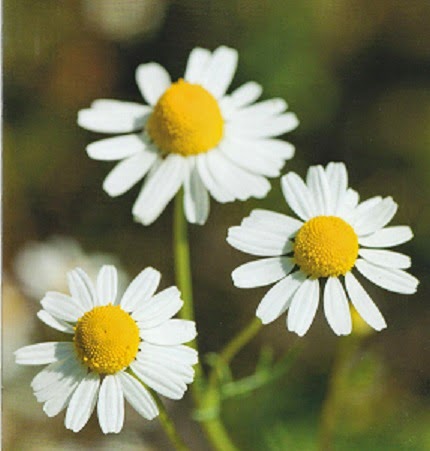
Medicinal Plant: CHAMOMILE

Image
Scientific or Botanical name: Matriarca recutita, Artemisa nobilis, Chamaemelum nobile In Spanish Chamomile is called manzanilla which means "little apple" because the their  distinct scent of apple. Chamomile is perhaps the most commonly used European herb in herbal medicine today.   They are two species of chamomile well  known German chamomile and English Chamomile. Fuente: Herbal Medicine

Medicinal plant: ALOE VERA

Image
Scientific name: Aloe vera      Aloe is one of the most commonly used and familiar herbal remedies. It is believe that Aloe is native to North Africa and coastal areas surrounding the Mediterranean Sea. Aloe has been frequently use since ancient times, from Cleopatra to Alexander the Great. According to the legend, Cleopatra daily massaged aloe gel into her skin. Aloe was famous for its ability to heal wounds and maintain healthy skin.      Aloe vera is a stemless or very short-stemmed succulent plant spread by offsets. It grows to about 36 inches. Aloe vera's leaves are thick, fleshy, and lance-shaped leaves of green to grey-green in color, with some varieties showing white flecks on the upper and lower stem surfaces. The margin of the leaf has small white teeth-like serrations and grows from 6 to 20 inches long. Usually, there are up to 16 leaves in a rosette. Aloe produces a singles flowering stalk with pendant, inch-long dropping yellowish flower...