Posts

Medicinal plant: Feverfew

Image
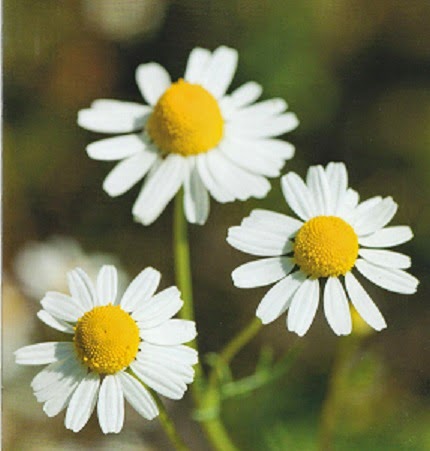
Scientific or Botanical Name: Tanacetum parthenium Feverfew is specifically native to the Balkan Peninsula, Anatolia and the Caucasus, but cultivation has spread the plant around the world and it is now common in Europe, the Mediterranean, North America and Chile.  Feverfew is a traditional medicinal herb, often grown solely for its pretty flowers, found in many old cottage gardens.  Earlier herbalists thought of it as "a general strengthener of the womb".  Numerous cultivars have been developed as garden ornamentals. Source: National Geographic The plant grows into a small  perennial bush with citrus-scented leaves, and there are numerous daisy-like flowers with bright-yellow centers. The plant spreads rapidly, and will cover a wide are after a few years. Feverfew prefers full sun and well-drainer soil, but tolerates a range of conditions. Flowers are daisy-like flowers, which bloom in summer, mean that feverfew is easily confused with similar ...

Medicinal plant: CHICORY

Image
Scientific or Botanical name: Cichorium intybus Chicory is native to Mediterranean regions, chicory is now naturalized in many parts of Europe, North America, and Australia. It is cultivated as a vegetable—usually by producing chicons in complete darkness- and  is also grown as a coffee substitute. Chicory grows naturally in the fields, roadsides and vacant land and planted. Chicory is an excellent raw food leaves eaten raw in salads, and  it has a high concentration of vitamin "A" and promotes growth in children. Source: Home Herbal

Eye relief - tea

Soak 2 tea bags in cool water, wringing them out, and then chilling them well in the refrigerator.  Also, it can use two tea bags after having made cups of green or herbal tea.  Once the bags are chilled, lie down and place them on closed eyelids for 5 to 10 minutes.  This is an easy and effective remedy to reduce puffiness around tired eyes and seize a chance for a quiet moment. 

Medicinal Plant: Eucaliptus

Image
Scientific Name:  Eucalyptus globulus Eucalyptus has more than 680 species, most native to Australia and others extending northward to Malaysia, Tanzania and the Philippines.  Eucalyptus is among the tallest trees in the world some species top 450 feet in height.    Eucalyptus has played a significant role in Australian Aboriginal culture for many thousands of years. Larger Eucalyptus trees store considerable quantities of water in their roots, and during droughts were a handy source of drinking water.   Eucalyptus globulus is the best know and most widespread species, planted and naturalized in warm temperature, subtropical, and tropical climates throughout the world.   The species name globulus, or globe shaped, refers to the juvenile leaves or alternatively the shape of the fruit.  Aborigines made ointments and rubs containing eucalyptus oil taken from crushed leaves, and these were applied tot he skin to heal minor woun...

Medicinal Herb: GREEN TEA

Image
Scientific or Botanical Name: Camellia sinensia Tea is second world's most popular beverage. All types of the tea, green, black and oolong, are produced from the Camellia sinensis plant using different methods. Tea's species name, sinensis, is a reference to China where the tea culture got start. Tea's historical origins are intertwined considerable legend and myth. According to one of those legends, the fabled Chinese emperor Shen Nong took the first slip of tea by chance in 2737 B.C. when dried leaves of the tea bush accidentally fell into a pot of boiling water, tinting it a light brown and transforming it into a refreshing drink. Tea spread from China to Japan in the 12th century. The Dutch East India Company brought the first tea to Europe in the early 1600. In recent times, It has become more popular in the West, where black tea has more traditionally been consumed. It is primarily green tea that has been used in traditional Chinese and Indian herbal medicine for...

Salad: GOTU KOLA

Finely slice 2 cups rinsed gotu kola leaves. Toss together with 1/3 cup finely chopped onion, 1 fresh chili (seeded, stemmed, and sliced), 2/3 cup freshly grated coconut, 1 teaspoon fresh lime juice, 1/2 teaspoon sugar, and Vs teaspoon salt. Serve immediately. Alternatively, put all the ingredients in a wok with a tablespoon of water and sauté for about 1 minute over medium-high heat. 

Medicinal Plant: GOTU KOLA

Image
Scientific or Botanical Name:  Centella asiatica Gotu Kola is a native tropical plant from India, Indonesia, China, Australia, Papua New Guinea, and Southeast Asia, although it has become naturalized in many others parts of the world. Gotu Kola , a Sri Lankan name which translates as conical leaf. Gotu Kola doesn't have smell or taste, and is used as a fodder crop, green vegetable or salad herb, a common in Vietnamese, Thai, and Malay cuisines. Source: National Geographic

Medicinal Plant: CHAMOMILE

Image
Scientific or Botanical name: Matriarca recutita, Artemisa nobilis, Chamaemelum nobile In Spanish Chamomile is called manzanilla which means "little apple" because the their  distinct scent of apple. Chamomile is perhaps the most commonly used European herb in herbal medicine today.   They are two species of chamomile well  known German chamomile and English Chamomile. Fuente: Herbal Medicine

Herbal Medicine: PASSION FLOWER

Scientific name: Passiflora incarnata Passion flower is a medicinal plant native to woodlands in the eastern United States, passion flower is know locally as "maypop" and was used by many Native American people for swellings, fungal infections, and as a blood tonic. Today it is generally regarded as a sedative and used for problems ranging from hyperactivity in children tot he tremors of Parkison's disease. In natural medicine the passion flower used long before the arrival of Europeans in the Americas, passiflora's calming, relaxant qualities are quickly apparent upon taking the herb, and underlie its many uses. Passiflora is most often employed to relieve anxiety and nervousness and to aid sleep, its use in this respect confirmed by clinical trials. Rarely producing drowsiness, passiflora takes the edge off worry and anxiety, bringing relief to symptoms such as a racing heart and tension headache. A mild analgesic, passiflora can help with migraines and...

Garlic Ear Oil

Ingredients: 1-2 cloves garlic , peeled and sliced 2 tablespoons olive oil How to make: Combine the garlic and olive oil in the top of double boiler. Warm over very low heat for 10 to 15 minutes or until the oil smells strongly of garlic. Use a stainless-steel strainer lined with cheesecloth to strain out the garlic. Strain well: no garlic pieces, no matter how tiny, should be left in the oil. Pour the strained oil into a small glass dropper bottle. Store in a cool pantry or closet, where the oil keep for several weeks, or in the refrigerator, where it will keep for several months. To use: Each time you use the oil, it needs to be warmed; just place the dropper bottle in a pan of hot water until the oil is warm not hot. If in doubt, do a test drop in your own ear.  Dispense a dropperful of the warm garlic oil down each ear. The ear canals are connected and the infection can move back and forth, so always treat both ears. If possible, hold a warm, dry clot...

Basil tea for headache and stress

Ingredients: 1 part basil leaf 1 part lemon balm leaf 1/4 part chamomile and/ or lavender flower Make the tea:  Combine the herbs and mix well. Use 1 teaspoon (if dried) or 2 teaspoons (if fresh) of the herb blend per up of boiling water. Pour the boiling water over the herbs, let infuse for 10 to 15 minutes, then strain. To use: Drink warm or at room temperature. headaches are always helped by soaking your feet in hot water( as hot as you an stand). Even better, add a drop or two of lavender essential oil to the foot bath. And better yet, have a friend quietly rub the nape of your neck and your shoulder. Sit back, sip your tea, soak your feet, and feel your headache drift away.

Lavender Antiseptic and calming spritzer

Ingredients: 7 tablespoons water 1 tablespoon vodka or witch hazel extract 5 - 10 drops lavender essential oil 1 (4 ounce) spritzer bottle Make the spritzer: Combine the water, vodka,and essential oil in the spritzer bottle. To use: Shake well before use as the essential oil will have risen tot he top. Use this lavender spritzer when you need a little calming essence. Lavender is also a powerful antiseptic. Use this bathrooms, in hotel rooms, and on your hands as needed. More information of lavander as herbal medicine.

Lavender - Lemon Balm calming Aid

A good home remedie to calm the nervous stress. Make the tea: Brew 1 quart of extra-strong lavender tea and 1 quart of extra-strong lemon balm tea, following the instructions for making an infusion. Make 2 quarts of fresh lemonade (lemon, honey and water to taste). Combine the lemonade with the teas and stir well. To use: Drink as much and as often as needed. For more information about Lavander as a herbal medicine .

Thyme honey

Thyme honey probably wouldn't be considered the strongest remedy for coughs and colds, but it is one of the better tasting. To make the honey: Fill a widemouthed glass jar half full of fresh thyme leaves and flowers. Gently warm a batch of raw, unpasteurized honey, so that it will better extract the properties of the thyme. Do not overheat or boil; heat over 110°F will kill the honey's enzymes and destroy its medicinal benefit. Add enough honey to the jar to cover the herbs, and place the jar in a warm spot (near a sunny window will work). Let steep for approximately 2 weeks.(You could also use a slow cooker set to 100°F. It will take only a few hours of constant warm heat to make a strong medicinal honey.) When the honey taste and smells strongly of thyme, it's finished. You can leave the tiny thyme leaves in the honey. Bottle and store in a cool pantry or in the refrigerator, where the honey will keep for several months. To use: Use by the teaspoonful. E...

Thyme syrup

This is one favorite syrups for treating coughs, colds, and chest complains. 2 - 4 onces thyme leaf and flower. (fresh is best but dried will do)  1 quart water 1 cup honey To make the syrup: Combine the thyme and water in a pan over very low heat.Simmer lightly,with the lid ajar to allow the steam to escape, until the liquid is reduced by half, giving you about 2 cups of strong thyme tea. Strain, and compost the spent herbs. Add the honey to the warm liquid and stir, just until the honey is melted.Store in a glass jar in the refrigerator, where the honey will keep for 3 to 4 weeks. To use: Take 1/2 to 1 teaspoon every couple off hours until the cold or cough subsides. Variation:   For a longer shelf life, add 1/4 cup of brandy to each cup of syrup. Brandy not only is a good preservative but also serves as an antispasmodic and will help relax the throat muscles, which is helpful in treating a cough. If you want more information about the thyme as h...

Herbal medicine: THYME

Image
Scientific name: Thymus vulgaris Thymus vulgaris Oddly, this diminutive, fragrant herb is beloved by gardeners and bees alike and has a long and respected medicinal past but is neglected by many contemporary herbalists. Thyme is a medicinal and culinary herb popular throughout the world but native to Europe and Asia. Thyme is an attractive, low-growing , perennial plant with long-lasting flowers that is often planted in rock gardens or in borders. Sometimes thyme, like camomile, is grown in pathways between paving stones, where it releases its fragrance when accidentally brushed against. Thyme thrives in full sun and prefers light, well-drained soils.

Infusion-Decoctions

When making tea, leaves and flowers are prepared differently form roots and bark, in much the same way that spinach is cooked differently from potatoes. Leaves and flowers are generally steeped in hot water so as not to overcook and destroy the enzymes,vitamins, and precious essential oils. Roots and bark are generally simmered to draw forth the more tenacious plant constituents. If you make a mistake and simmer a root that should have been steamed, don't panic. Your remedy will work. The process of steeping a plant in boiling water is called infusion, while the process of simmering the plant in lightly boiling water is called decoction. When in doubt, steep. Steeping is much less destructive to many of the important medicinal components of plants. The longer you steep the herb, the stronger the tea. That's not always desirable, as long steeping times can bring out some of the less desirable parts of the plant. Infusion Decoction

Healthy skin and hair

Calendula ( Calendula officinalis ): A soothing herb that also stimulates healing of the skin. Take an infusion of the herb or dilute the tincture for abrasions, wounds, ulcers, or as a mouthwash. Use as a cream or macerated oil to relieve eczema, rashes, or sore skin. Oats ( Avena sativa ): Cleansing and soothing, oats make a good alternative to soap or detergents for very sensitive skin. Grind oats to a power and add to the bath water, or mix with a little water or oil to make a soothing mask or cleanser. Chamomile ( Matricaria recutita ): Soothing and anti-inflammatory. Use cooled chamomile tea as a lotion to relieve any hot, inflamed skin condition (e.g. sunburn, hives, or rashes). Drink the tea, with its calming and anti-allergenic properties, to alleviate eczema, rashes, and so on. Chickweed ( Stellaria media ): A wonderfully cooling and soothing herb for the skin, chickweed will relieve any irritation such as eczema, psoriasis, hives, ...

LEMON BALM AND ROSE TEA

This herbal tea contains a fusion of empowering yet relaxing lemon balm and mood-enhancing, sensual rose petals to make the ultimate summer refreshment. It can be enjoyed hot or cold, and is best drunk slightly bitter. For the best results, pick fresh lemon balm leaves and fresh perfumed rose petals from the damask rose (Rosa x damascena) or French rose (Rosa galica). Ingredients: 16 leaves of fresh lemon balm or 1 tbsp dried lemon balm 2 rose heads with petals removed, or 2 tbsp dried rose petals Method 1. Place the fresh lemon balm leaves and rose petals in a large teapot. If using dried lemon balm and rose petals, spoon them into the teapot instead. 2. Boil. 16 fl oz (500 ml) of water, allow to cool for 5 minutes, then pour it into the teapot. Allow to infuse for 5 minutes and then serve. More water can be added later if needed to re-infuse the leaves and the rose petals.

Medicinal plants: Lemon balm

Scientific name: Melissa officinalis Lemon balm's species name, officinalis, indicates that the plant has long been an "official" herb of apothecaries. Its genus name, Melissa, derives from melisso-phyllon, a Greek term meaning "bee leaf". Anyone who has grow lemon balm knows that bees are very attracted tot his plant; it fairly hums with bee activity. Camouflaging its potent medicinal actions in sweet-scented leaves, lemon balm is considered one of the most important members of the large mint family. It is a features remedy for heart disease (and heartache), depression and anxiety, nervous disorders, and a host of viral and bacterial infections.